Address
We are a Gastronomic Consulting and Mentoring Agency based in the City of Miami, FL. - US
Work hours
Monday to Friday: 7 AM - 7 PM
Saturday: 10AM - 5PM
Address
We are a Gastronomic Consulting and Mentoring Agency based in the City of Miami, FL. - US
Work hours
Monday to Friday: 7 AM - 7 PM
Saturday: 10AM - 5PM
The influence of the menu on the customer experience: Learn how to create captivating menus that increase sales with InGastro Concepts.
A restaurant menu is more than just a list of dishes. It's a powerful tool that can significantly influence the customer experience and, consequently, sales. A well-designed menu not only makes decision-making easier but can also increase the average spend and improve overall diner satisfaction.
According to menu design experts, such as the consultants at InGastro Concepts , an attractive and well-structured menu can enhance a restaurant's image and attract more customers. Furthermore, small details like price presentation and dish descriptions can make a big difference.
In this article, we'll explore how a strategically designed menu can become a key ally for your food business. Discover how to optimize your menu to offer a memorable experience and increase your sales.
The dishes presented in a restaurant are more than just a list. They represent a strategic tool that directly influences the diner's perception and behavior. Today, menus have become key visual and communicative elements, capable of conveying the essence of the establishment and guiding the customer toward more profitable purchasing decisions.
The evolution of menu design has transformed these documents from simple lists of options into powerful marketing tools. Choosing the right words to describe each dish can make all the difference, creating an emotional connection with the customer. Furthermore, the use of visual elements such as high-quality images and attractive typography can enhance the dining experience.
Specialized companies like InGastro Concepts offer comprehensive consulting services to innovate in menu creation, creating menus that not only attract customers but also encourage higher average spending. This transformation of menus into strategic tools has proven essential for success in today's food service industry.
Menu design goes beyond simply presenting culinary options. It's a visual and emotional tool that guides the customer and influences their purchasing decisions. A well-structured menu not only enhances the dining experience but can also significantly increase sales.
The colors and presentation of the menu play a key role. Warm tones , such as orange or red, can stimulate the appetite and draw attention to featured dishes. Additionally, placing key items in the upper right corner , a highly visible area, can increase sales of higher-margin dishes.
Pricing structure is crucial. Removing currency symbols or placing prices at the end of descriptions can reduce the perceived cost, encouraging customers to spend more. Menu analysis shows that a well-designed menu can increase average spend by 15%.
Furthermore, the use of appealing colors and evocative descriptions can create an emotional connection with the customer, resulting in greater satisfaction and, consequently, increased sales . Companies like InGastro Concepts highlight the importance of these visual strategies for boosting business performance.
An attractive menu is essential to capturing diners' attention and offering a memorable experience. Visual elements and menu structure play a key role in this endeavor.
Professional photos of dishes are key to whet the appetite and attract customers. For example, an Italian restaurant could use images of pizzas and pastas with warm colors that evoke Italian authenticity. Typography should be clear and consistent with the brand's identity, avoiding overly complicated fonts that can be distracting.
Colors should reflect the restaurant's personality. A modern establishment might opt for neutral tones with vibrant accents, while a traditional location might use warmer colors. Materials, such as paper or card, should also convey quality and consistency with the brand.
| Element | Benefits | Example |
|---|---|---|
| High quality photos | Increase appetite and perception of quality | Image of a perfectly cooked steak |
| Clear typography | Improves readability and user experience | Easy-to-read text on a digital menu |
| Warm colors | They stimulate the appetite and create a cozy atmosphere | Menu with orange and reddish tones |
A well-thought-out design, combined with effective menu engineering, not only attracts customers but also guides them toward more profitable purchasing decisions. This, in turn, improves satisfaction and fosters customer loyalty.
Menu design is not just about listing dishes; it's about applying psychological strategies that influence diners' purchasing decisions. Menu engineering is a discipline that combines psychology and marketing to optimize sales and customer satisfaction.
One of the clearest examples is price anchoring . Placing an expensive dish next to a more affordable one creates a perception of value that makes the second option seem more appealing. Furthermore, portion size can influence perceived value. One study shows that customers tend to find options offering a better balance between quality and price more attractive.
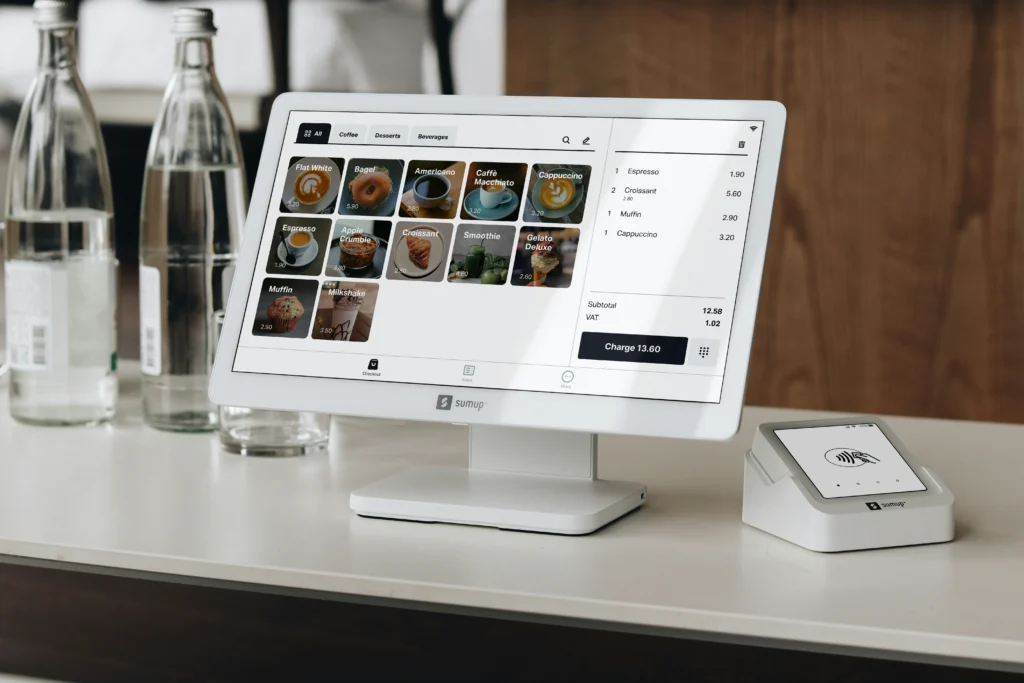
Menu organization also plays a crucial role. The golden triangle technique suggests placing the most important items in the most visible area, such as the top right corner. Furthermore, using warm colors and evocative descriptions can guide the customer toward more profitable choices.
| strategy | Our Mill | Example |
|---|---|---|
| Price anchoring | Makes more profitable dishes look more appealing | Place a premium plate next to a standard one |
| Evocative descriptions | They create an emotional connection with the customer | "Juicy steak with homemade sauce" |
| Use of colors | Stimulates appetite and attention | Menu with orange and red tones |
According to a Restaurantware study , a well-designed menu can increase average spending by 15%. Furthermore, companies like InGastro Concepts emphasize the importance of these techniques for maximizing sales.
Marketing is an essential tool for any business, and in the food service industry, these strategies can make the difference between success and the competition. There are proven tactics that not only attract more customers but also encourage higher average spending.
One of the most effective strategies is to create a sense of scarcity. Limited-time offers or messages like "only 5 dishes left" generate urgency, leading customers to make quicker decisions. This not only increases sales but also improves the perceived value of the product.
Marketing psychology also plays a key role. The rule of reciprocity suggests that when customers receive something free, such as a sample or a discount, they are more inclined to return the favor, increasing their orders. Furthermore, the emotional connection created by evocative descriptions or engaging presentations can strengthen customer loyalty.
These tactics, combined with strategic pricing, can transform the dining experience, turning a simple menu into a powerful tool for boosting business. Well-executed marketing not only attracts more customers but also strengthens the restaurant's image in the market.
A well-organized menu is key to providing a positive experience. Clarity and structure guide diners, making it easier to make decisions. This not only improves satisfaction but can also increase sales.
The presentation of the dishes should be simple and appealing. Clear and concise descriptions help customers quickly understand the available options. Furthermore, a design that prioritizes adequate spacing avoids visual overload, making it easier for customers to focus on key items.
| Element | Benefits | Example |
|---|---|---|
| Clear descriptions | They facilitate quick decisions and reduce doubts | Fresh lettuce salad with balsamic dressing |
| Intuitive organization | Improves menu navigation | Sections divided into starters, main courses and desserts |
| adequate space | Avoid visual saturation | Blank lines between descriptions |
According to experts at InGastro Concepts , a well-organized menu can guide customers toward more cost-effective options. This strategy not only improves the experience but also increases service efficiency.
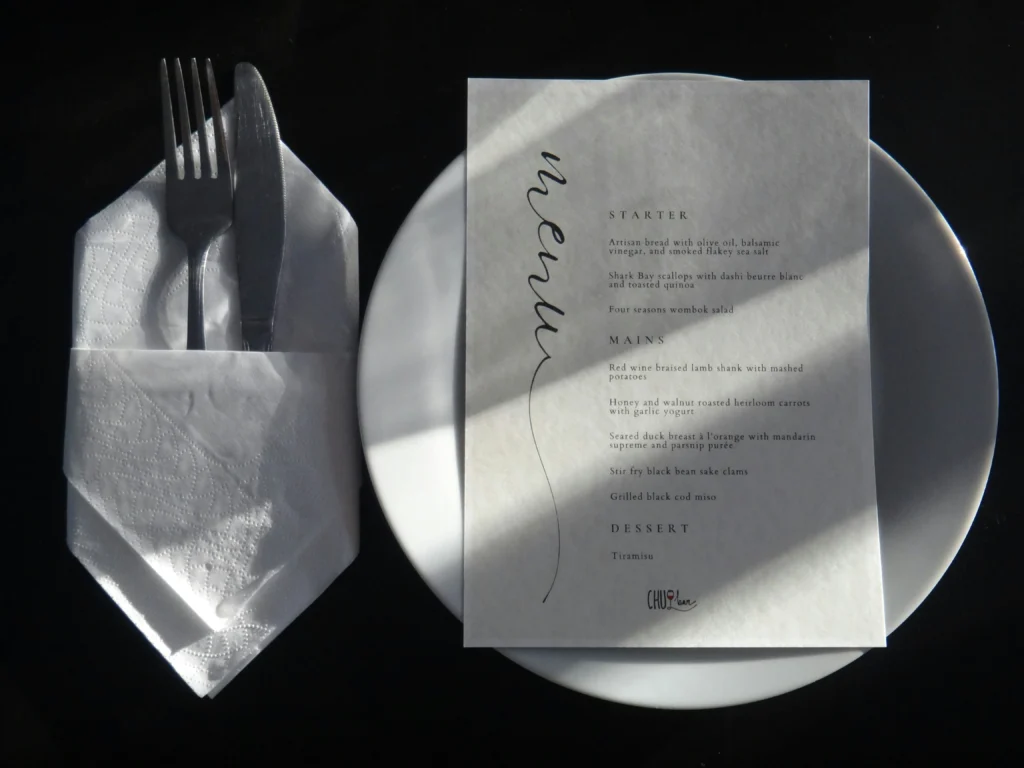
In short, a clearly structured and accessible menu is essential for a memorable customer experience. By combining visual elements with engaging descriptions, restaurants can offer an experience that satisfies both the palate and the diner's expectations.
Designing an effective menu goes beyond simply presenting dishes, becoming a key element of brand identity . Visual consistency between the menu and the restaurant's image strengthens the emotional connection with diners , creating a more memorable experience.
The use of colors like green can influence the perception of freshness and naturalness, guiding diners toward healthier options. Furthermore, featured menu items , through evocative descriptions and strategic placement, capture attention and direct purchasing decisions.
To strengthen brand consistency , it's essential that the menu design reflects the restaurant's personality. InGastro Concepts suggests that elements such as typography and color schemes should align with the restaurant's visual identity, creating an atmosphere that attracts and retains customers.
A well-designed menu not only enhances the dining experience, but also becomes a powerful tool for attracting and retaining customers, thus strengthening the brand 's position in the market.
Menu engineering has proven to be a powerful tool for driving sales and improving the diner experience. Below, we'll explore some real-life examples that highlight the success of this strategy.
A notable example is McDonald's, which implemented a simplified menu with clear and appealing options. Detailed descriptions of its dishes, such as freshly cut fries, attracted more customers. This resulted in a 12% increase in daily sales.
Another example is an Italian restaurant that redesigned its menu using warm colors and evocative descriptions. Sales increased by 18% in the first few weeks. Diners highlighted the ease of choice and the perceived quality.
These examples demonstrate that a good menu strategy can transform the diner experience and generate increased revenue.
Visual elements and engaging descriptions on a menu are essential for capturing diners' attention and creating a memorable experience. These details not only enhance the menu's appearance but also influence customers' purchasing decisions.
High-quality images are essential for whetting appetites and attracting customers. A study reveals that professional photography can increase sales by up to 30%. Investing in this type of content ensures that dishes are presented in an appetizing and professional manner , which in turn enhances the perception of quality.
Detailed and creative descriptions can evoke feelings and enhance the appeal of dishes. For example , a description like "juicy steak with homemade sauce" creates an emotional connection with the customer. These strategies not only highlight the ingredients but also convey quality and culinary effort.
To integrate these elements effectively , maintaining visual consistency on the menu page is key. Strategies that combine professional photography with evocative copywriting enrich the diner's experience, leading to more profitable purchasing decisions.
Effective menu pricing is crucial for maximizing sales and enhancing the customer experience. A well-structured menu design not only facilitates decision-making but can also increase average spend and overall customer satisfaction.
Price anchoring is a technique that involves placing more expensive dishes next to more affordable options, creating a perception of value that makes the more profitable dishes seem more appealing. This strategy not only attracts the customer but also guides them toward more cost-effective choices.
The typography and size of the prices also play a crucial role. A clear and legible design makes it easy to compare dishes and avoids confusion. Furthermore, the use of warm colors and evocative descriptions can highlight the most profitable dishes , creating an emotional connection with the customer.
The visual organization of the menu is key to capturing the customer's attention and guiding their purchasing decision. An intuitive design that prioritizes adequate spacing avoids visual overload, making it easier for customers to focus on key items. Furthermore, the use of attractive colors and evocative descriptions can increase sales and customer satisfaction.
A well-designed menu not only enhances the dining experience, but also becomes a powerful tool for attracting and retaining customers, thus strengthening the brand 's position in the market.
Digitalization has revolutionized the way restaurants interact with their customers. Innovative tools such as interactive menus and QR codes are transforming the dining experience, offering greater efficiency and personalization.
Digital menus allow for real-time updates to offers, eliminating printing costs and facilitating quick changes. This adaptability not only improves efficiency but also attracts a more connected and technologically savvy clientele.
QR codes have gained popularity as a way to access digital menus. This technology allows customers to view dishes on their mobile devices, place orders, and even pay without physical contact, which has proven especially useful in mobile environments.
Social media is a key platform for promoting your menu. Visual posts on Instagram or Facebook, showcasing appealing dishes, can capture attention and attract more customers. Additionally, a strong presence on Google improves visibility and makes it easier for diners to find your restaurant.
Tips such as sharing high-quality content and using relevant hashtags can increase a business's popularity . This, combined with email marketing strategies, keeps customers informed about new products and promotions.
In short, digital innovation not only improves the diner experience but also increases the restaurant's profitability and popularity. Adapting to mobile environments is essential to staying competitive and delivering a memorable experience.
A well-designed menu is essential to the success of any restaurant. Throughout this article, we've explored how a structured and appealing restaurant menu can influence diners' perceptions of quality and purchasing decisions. Choosing quality ingredients and creating an attractive offering are fundamental to providing a memorable experience.
As mentioned in the menu analysis , a well-thought-out design can increase average spend by 15%. Furthermore, companies like InGastro Concepts emphasize the importance of these visual strategies for boosting business performance.
We invite restaurant owners to implement these techniques and contact InGastro Concepts for expert advice and to improve their menus. An optimized menu not only enhances the dining experience but also becomes a powerful tool for attracting and retaining customers, thus strengthening the brand's market position.
Menu design directly influences diners' perceptions and decisions. An attractive design, with brand-appropriate colors and professional photography, can enhance the customer experience and drive sales.
Menu engineering allows you to strategically organize dishes, highlighting the most profitable or popular ones. This improves business profitability and customer satisfaction.
Using techniques such as price anchoring, portion sizes, and evocative descriptions, the menu's intuitive organization also facilitates diners' decision-making.
High-quality photos help highlight dishes, creating a visual impact that can influence diners' choices and enhance their experience.
Using strategies such as the reciprocity rule and highlighting popular or high-profit options. The design and descriptions should be clear and attractive.
Colors should reflect the brand's identity and create an inviting atmosphere. For example, green can convey freshness and naturalness.
Designing interactive menus and using QR codes to access them. This improves the customer experience in the digital age.
Clear and evocative descriptions help diners better understand dishes, highlighting ingredients and increasing the likelihood of purchase.
Analyzing sales, dish popularity, and customer feedback allows you to identify which menu items are performing well.
Create a sense of scarcity or urgency, and use the affect heuristic to connect emotionally with the customer.
Subscribe and receive the latest posts in your email.